Detailed Guide to **Post-Tết Ochna Care** for Healthy Plants and Timely Blooms
You’ve enjoyed your beautiful Ochna integerrima (Mai Vàng) during Tết, a vibrant symbol of spring and good fortune. Now that the festivities are over, it’s time to shift your focus. The period right after Tết is absolutely crucial for your Ochna’s health and its ability to flower beautifully again next year. Neglect it now, and you’ll pay the price later. Trust me, I’ve seen countless trees struggle because this vital recovery phase was overlooked.
1. The Importance of **Post-Tết Ochna Care**
Think about it: your Ochna just put on a spectacular show, pouring all its energy into those brilliant yellow blossoms. That takes a toll. Many trees come out of Tết feeling depleted and vulnerable.
Why Ochna Trees Weaken After Tết:
- **Nutrient Depletion from Flowering:** Producing so many flowers drains the plant of essential nutrients. It’s like running a marathon without proper fueling.
- **Weakened Root Systems:** Often, pre-Tết bloom stimulants are used. While they deliver stunning results, they can stress and weaken the plant’s root system over time.
- **Care Mistakes During Tết:** We all get a little excited during the festive season. Over-fertilization or nutrient shock from improper watering can inflict damage on your plant.
Goals of Post-Tết Care:
So, what are we trying to achieve with this specialized care? It’s all about helping your Ochna bounce back stronger than ever.
- **Restore Vitality:** We need to help the tree regain its strength and energy.
- **Stimulate New Shoots and Leaves:** This signals new growth and the beginning of a healthy vegetative cycle.
- **Lay Groundwork for Next Year’s Tết Blooms:** The care you provide now directly impacts the quality and abundance of flowers for the following Tết season.
2. The Golden Time to Start Effective **Post-Tết Ochna Care**
Timing is everything when it comes to Ochna. Starting your care routine at the right moment can make a world of difference.
For Potted Ochna Indoors:
If your Ochna was inside for Tết, it needs to gradually re-acclimatize to the outdoors. I usually recommend moving it out around the 8th day of the lunar new year.
- **Location:** Place it in a spot with partial shade and good air circulation for 3-5 days. This gentle introduction to outdoor conditions prevents shock.
- **Important Note:** Absolutely avoid direct, harsh afternoon sun during this initial period. It can easily scorch the delicate leaves.
For Ochna Planted in the Ground (Outdoors):
These trees are already accustomed to the elements, so no need to relocate them. They’re good to go where they are.
Regardless of where your Ochna resides, the ideal time to begin intensive, specialized care is generally around mid-January in the lunar calendar. This gives the plant a short recovery window after Tết.
3. Detailed Steps for **Post-Tết Ochna Care**
Now, let’s dive into the practical steps. This is where your consistent effort will truly pay off.
3.1. Proper Ochna Pruning Techniques
Pruning is fundamental. It’s not just about aesthetics; it’s about channeling the plant’s energy effectively.
- **Purpose:** We prune to remove weak, diseased branches, get rid of all spent flowers, and most importantly, stimulate healthy new shoots.
- **Timing:** About a week after Tết, right after defoliation, is when you should grab your shears.
- **How to:**
-
- Systematically prune excessively long, diseased branches, any unbloomed buds, and all the faded flowers.
- This is also your chance to maintain beautiful Ochna tree styles. Think about shaping it like a classic pine tree for an elegant look.
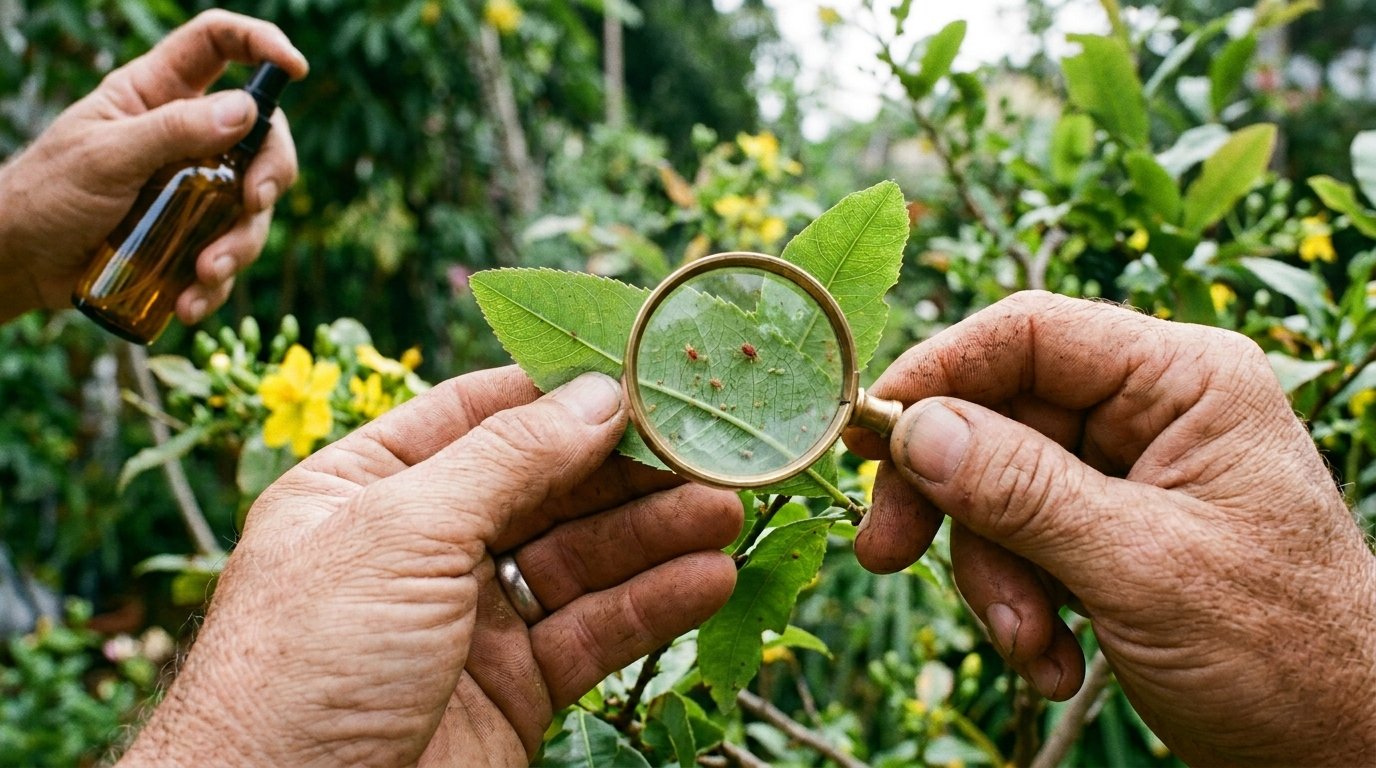
Cận cảnh bàn tay dùng kính lúp kiểm tra lá mai vàng để phát hiện sớm và phòng ngừa sâu bệnh, thể hiện cách chăm mai vàng sau Tết kỹ lưỡng. - For any larger cuts, always use specialized shears and apply tree wound sealant. This protects against disease and aids healing.
-
- **Stimulating New Shoots:**
- A light spray of diluted nitrogen fertilizer can encourage fresh growth.
- If you notice the branches aren’t developing strongly, you can cautiously use a growth stimulant like GA3.
3.2. Thorough Ochna Plant Cleaning
A clean plant is a happy plant. Accumulated moss and mildew can harbor pests and diseases.
- **Removing Moss and Mildew:**
- Start with a strong jet of water to dislodge most of the grime.
- If stubborn patches remain, gently scrub with a soft brush.
- For persistent fungal patches, a diluted nitrogen solution can help clean the bark.
- **Detoxifying Newly Bought Ochna:** If you’ve just acquired a new Ochna, it might have residual chemical fertilizers. Flood the pot and drain it 1-2 times to wash away any excess.
3.3. Regular Soil and Pot Replacement for Ochna
Your Ochna needs good footing to thrive. Old, depleted soil won’t cut it.
- **Reasons for Soil Replacement:**
- We need to replenish essential nutrients like nitrogen and potassium.
- Old soil tends to become compacted and loses its ability to hold nutrients, suffocating the roots.
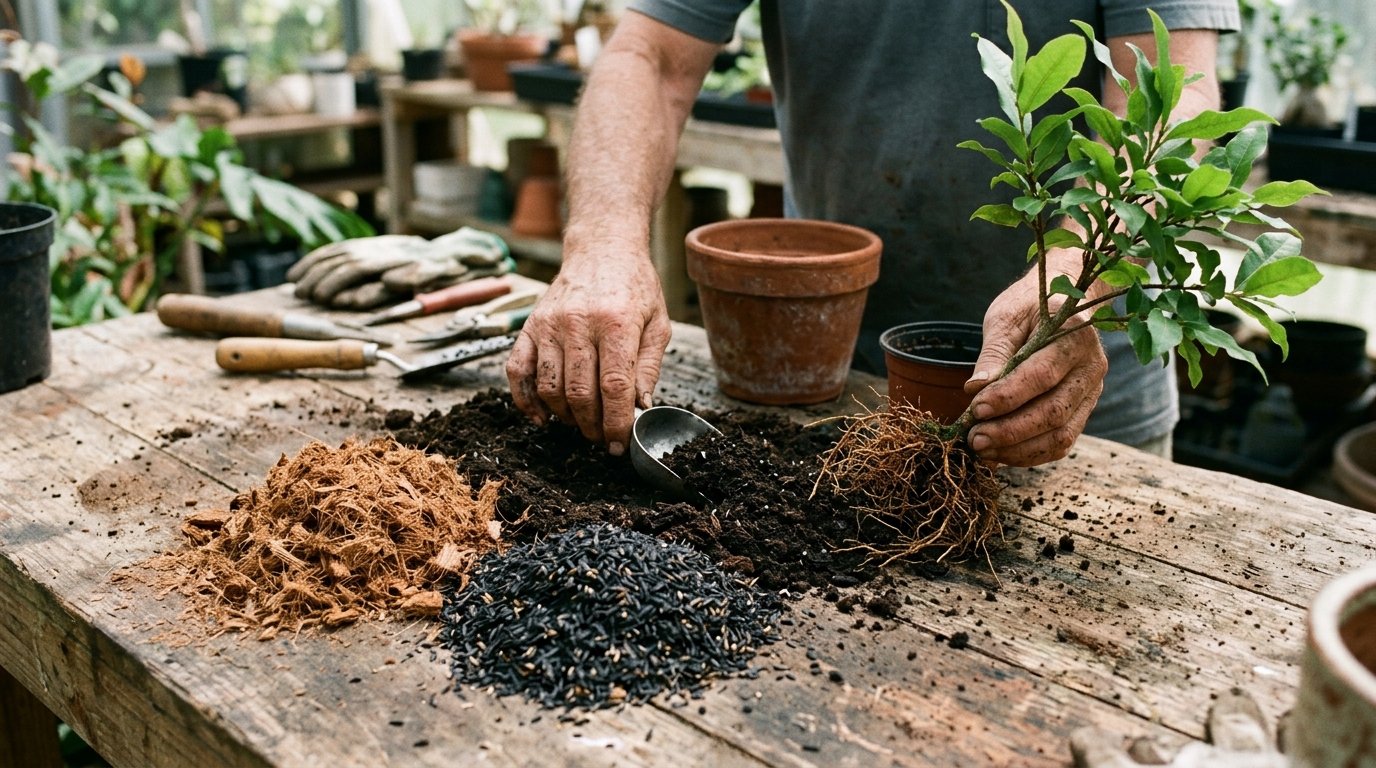
- **How to Mix Ochna Potting Soil at Home:**
- My go-to blend is a ratio of 4 parts coconut coir, 3 parts burnt rice husks, 2 parts loamy soil, and 1 part good quality organic fertilizer.
- Make sure all your ingredients are thoroughly processed and free of pests or pathogens.
- **Soil Replacement Procedure:**
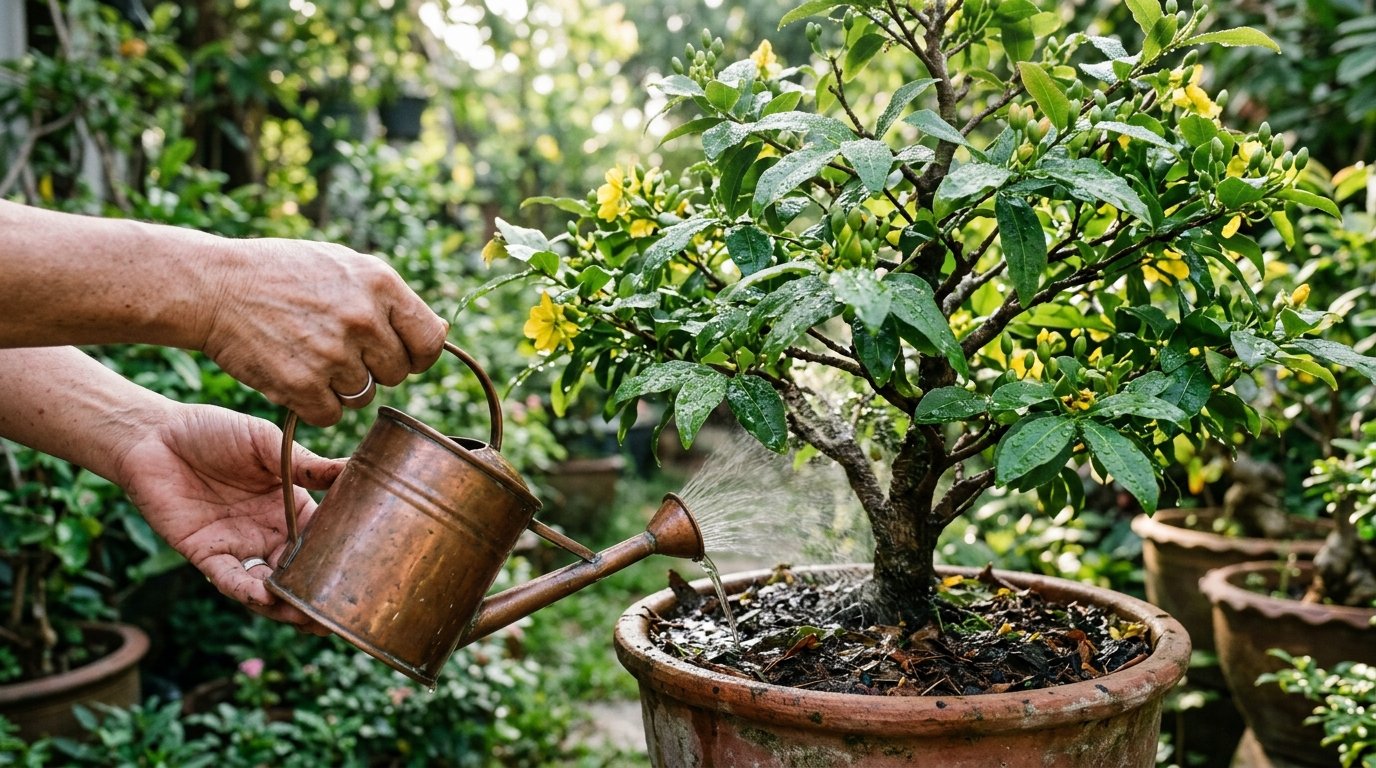
Đôi tay đang cẩn thận tưới nước cho cây mai vàng trong chậu, minh họa cách chăm mai vàng sau Tết để cây luôn xanh tốt. - Gently work around the roots, removing as much old soil as possible without damaging the fine feeder roots. Those are critical!
- While you’re there, prune away any old or diseased roots you find.
- **Pot Replacement Guide (if needed):**
- **Ideal Timing:** I find late March to early April (lunar calendar) is best, usually every 2-3 years.
- **Choosing a Pot:** Always select a pot that is a bit larger, appropriate for your tree’s new size.
- **Filling the Pot:** Fill about two-thirds of the new pot with your fresh soil mix before carefully placing the tree.
- **Moisture Retention:** You can cover the soil surface with moisture-retaining materials like clay pebbles.
- **Crucial Tip:** Never apply chemical fertilizer immediately after changing the soil. Let the roots settle first.
3.4. Root Stimulation for Fast Ochna Recovery
The roots are the lifeline of your Ochna. Stimulating them helps accelerate recovery.
- **Rooting Products:** You’ll find a variety of effective root stimulants on the market. Pick one that suits your needs.
- **Dosage and Frequency:** Always follow the manufacturer’s instructions for mixing. I typically apply it 3-4 times, with a 7-10 day interval between applications.
- **Other Methods:** Don’t limit yourself to just soil drenching. You can also spray root stimulators directly onto the leaves and stems.
3.5. Appropriate Watering Regime for Ochna
Watering seems simple, but getting it right is key. Too much or too little can be detrimental.
- **Frequency:** On sunny days, I water twice daily – early morning and late afternoon. On cloudy days, once is usually enough.
- **Amount:** The exact quantity of water depends on the size of your tree. Larger trees naturally need more.
- **Watering Technique:** Direct the water to the base of the plant, ensuring the roots get a good drink. Then, give the entire canopy a fine mist spray; this helps with humidity and keeps leaves clean.
3.6. Fertilizing Ochna for Vigorous Growth
Once your Ochna has recovered a bit, it’s time to feed it for sustained growth.
- **Timing:** Wait about 15-20 days after you’ve changed the soil before applying fertilizer.
- **Recommended Fertilizers:**
- I always prioritize organic fertilizers like worm castings or well-rotted cow manure. They provide slow-release nutrients and improve soil structure.
- **Dosage:** For a typical Ochna, 1-2kg per tree is a good starting point.
- **Benefits of Organic Fertilizers:**
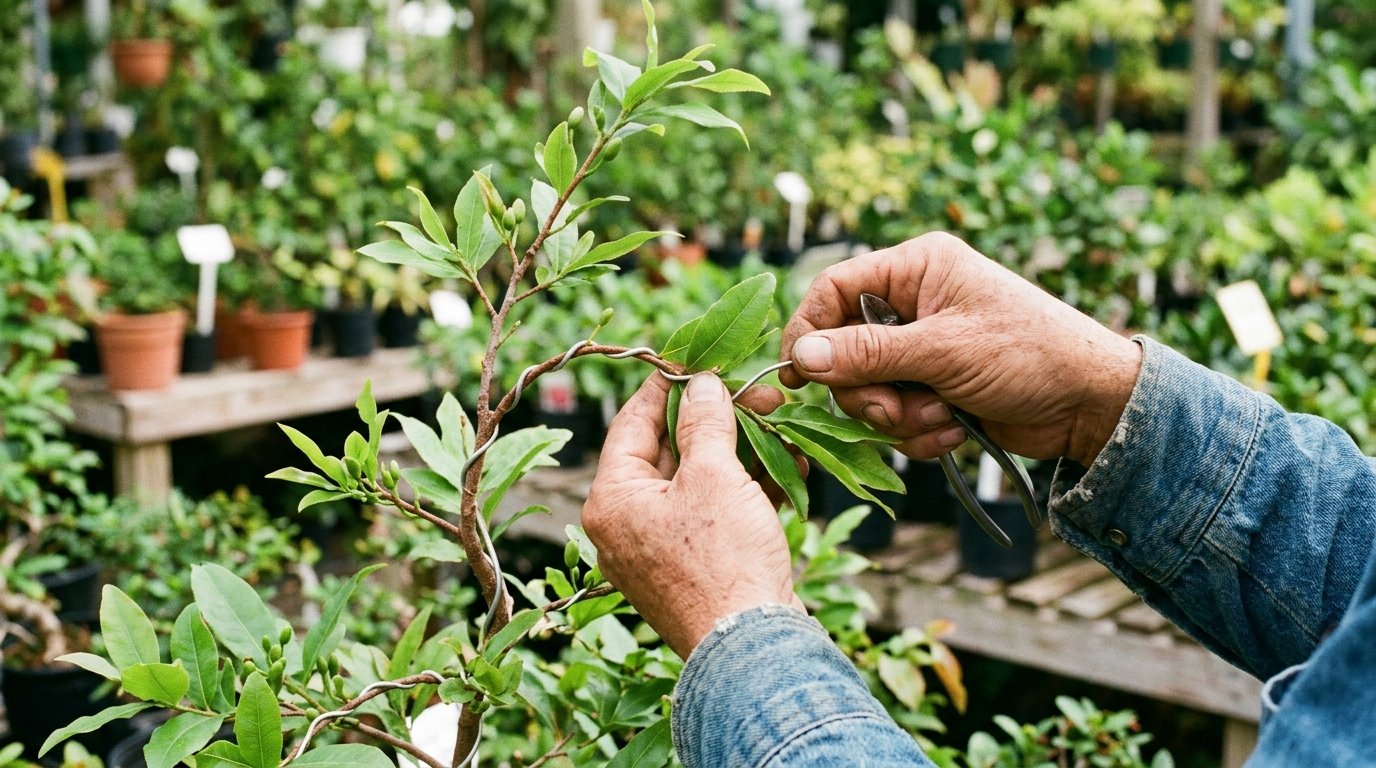
Bàn tay người làm vườn tỉ mỉ uốn nắn cành mai vàng con bằng dây kẽm để tạo dáng đẹp, đây là một phần quan trọng trong cách chăm mai vàng sau Tết. - They promote strong, healthy root systems.
- Organic matter significantly boosts the plant’s resistance to pests and fungal diseases.
- You get a steady, sustainable supply of nutrition, which is far better than quick, artificial boosts.
3.7. Artistic Shaping for Ochna Trees
Once your Ochna is healthy and actively growing, you can start thinking about shaping it for next year’s display. This artistic touch truly elevates its beauty.
- **Ideal Timing:** Late July to late summer is usually the best window for this.
- **Preparation:** Before you start bending, prune away any weak or diseased branches. You want to work with healthy material.
- **Branch Bending Techniques:**
- You can use galvanized wire, copper, lead, or even cloth strips to guide the branches.
- Work methodically: start with the main trunk, then move to larger branches, and finally the smaller ones.
- **Important Note:** Don’t wrap too loosely or too tightly. Aim for a gentle 45-degree angle for most bends.
- **Wire Retention Time:** Leave the wires on for 3-4 months, or up to a year, depending on how quickly the branch sets its new shape.
4. Effective Pest and Disease Control for Healthy Ochna
Pests and diseases are an unfortunate reality of gardening. Early detection and prevention are your best defense.
Common Pests and Diseases:
- **Pests:** Watch out for leaf-eating worms, stem borers, tiny red mites, and those pesky aphids.
- **Diseases:** The most common issue I see is leaf yellowing, which can indicate various problems.
Manual Control Methods:
For small infestations, sometimes the simplest solutions are the best.
- If you spot just a few pests, hand-picking them can be very effective.
- For aphids, a strong jet of water sprayed on the underside of the leaves often dislodges them.
Using Biological Products:
I always lean towards biological solutions when possible. They are gentler on the environment and your plants.
-
- For higher pest densities, concoctions made from garlic, chili, or ginger can be surprisingly effective.
- Consider spraying preparations from cinnamon or lemongrass essential oil. These are great deterrents for ants, aphids, and general leaf-eating pests, especially when your Ochna starts to bud.
Preventive Spray Schedule:
A proactive approach saves a lot of headaches later. Implement a preventive spray schedule:
- About 10 days after pruning.
- When new shoots first begin to emerge.
- And again when the new leaves have just matured.
5. Year-Round Ochna Cultivation and Care Schedule
Think of Ochna care as a continuous journey, not just a one-off event. Here’s a general roadmap for the year.
5.1. Ochna Care from January to June (Recovery Phase)
This is all about getting your tree back on its feet after the Tết celebrations.
- **Goal:** Restore vitality and stimulate robust new shoots.
- **Measures:**
- Prune about 30% of the branch length to encourage new growth.
- Replace the soil and add phosphorus to support root development and young shoots.
- Water adequately, paying close attention to prevent both waterlogging and drought.
- Ensure the plant receives sufficient light and rotate it regularly to ensure even growth.
5.2. Ochna Care from June to December (Development & Flowering Preparation Phase)
With a strong foundation, this phase focuses on building a healthy plant ready for the next flowering season.
- **Goal:** Nurture healthy plants and meticulously prepare for the upcoming Tết flowering season.
- **Measures:**
- Supplement with fertilizers that have higher concentrations of nitrogen and phosphorus to fuel growth and bud formation.
- Master the technique of defoliating your Ochna in late November. This is a crucial step to concentrate all the plant’s energy into developing strong flower buds.
- Remain vigilant with pest and disease prevention. Keep an eye out for issues like leaf spot and rust, addressing them immediately.
6. Frequently Asked Questions About Ochna Care
I get a lot of common questions about Ochna, so let’s tackle a few here.
What is a well-established potted Ochna?
A well-established potted Ochna, often called “Mai thuần chậu,” is a tree that has grown in a pot for a significant period. Its root system is firmly anchored and has naturally adapted to the pot’s confines and the older soil within. These trees are typically more stable and resilient than recently potted ones.
When is the best time to pot an Ochna?
The ideal time to move an Ochna from the ground into a pot is usually around October in the lunar calendar each year. This is because the tree has started to draw nutrients back into its trunk, making it less susceptible to shock when you prune its roots for potting.
Which month should I change an Ochna pot?
You should consider changing your Ochna’s pot from late March to early April (lunar calendar). By this time, the root system has stabilized from the post-Tết care, making it less prone to damage during the repotting process. Also, the old pot might simply be too small for the growing tree!